Before the doorbell
Set one useful imperfection in view: a pitcher already sweating, a folded note, a bowl of citrus. The room should look ready for people, not sealed for inspection.
Small tables, remembered well
The almanac is built for hosts who care about the hour before dinner, the way color changes appetite, the path from doorway to chair, and the precise moment a gathering becomes easy. Rorami does not chase spectacle. It collects repeatable rituals for compact apartments, borrowed tables, quiet courtyards, and rooms where six people can hear one another.
The house grammar
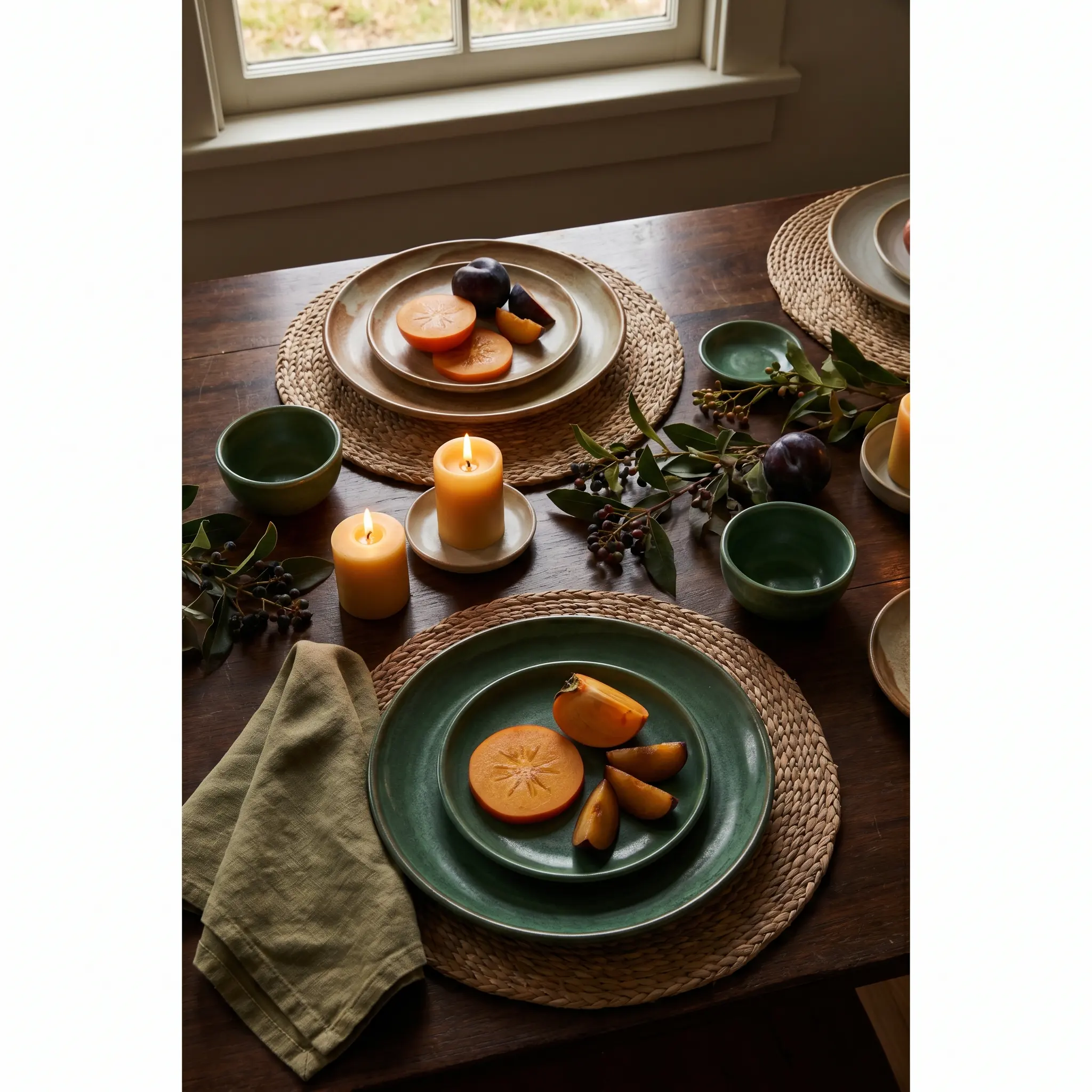
Rorami treats hosting as a sequence of small decisions rather than a performance. The door path, glass height, salt dish, chair angle, first smell, and final light all carry information. When those details agree, guests relax faster because they understand the room before anyone explains it.
The almanac favors menus that can bend: one bright bowl, one warm center, one crisp interruption, one quiet finish. It studies tables that feel personal without becoming precious, generous without becoming theatrical, and composed without erasing the evidence of real people moving through the evening.
Set one useful imperfection in view: a pitcher already sweating, a folded note, a bowl of citrus. The room should look ready for people, not sealed for inspection.
Offer a drink with a small texture shift, such as salted herb water beside something sparkling. The contrast gives early arrivals a subject that is not work, weather, or delay.
Serve the warmest plate when conversation has started crossing the table. Food that demands attention too early can make the room feel supervised.
Leave one shared dish on the table after dessert. It becomes a soft permission slip for people who want to linger without asking whether the evening is over.
The table method
Rorami’s house method is a loose score for the evening. It helps a host arrange comfort before guests arrive, shape the first ten minutes, protect the middle hour from over-management, and land the ending gently. The method is intentionally modest: it works with an ordinary table, a narrow kitchen, and a budget that leaves room for conversation.
Color register
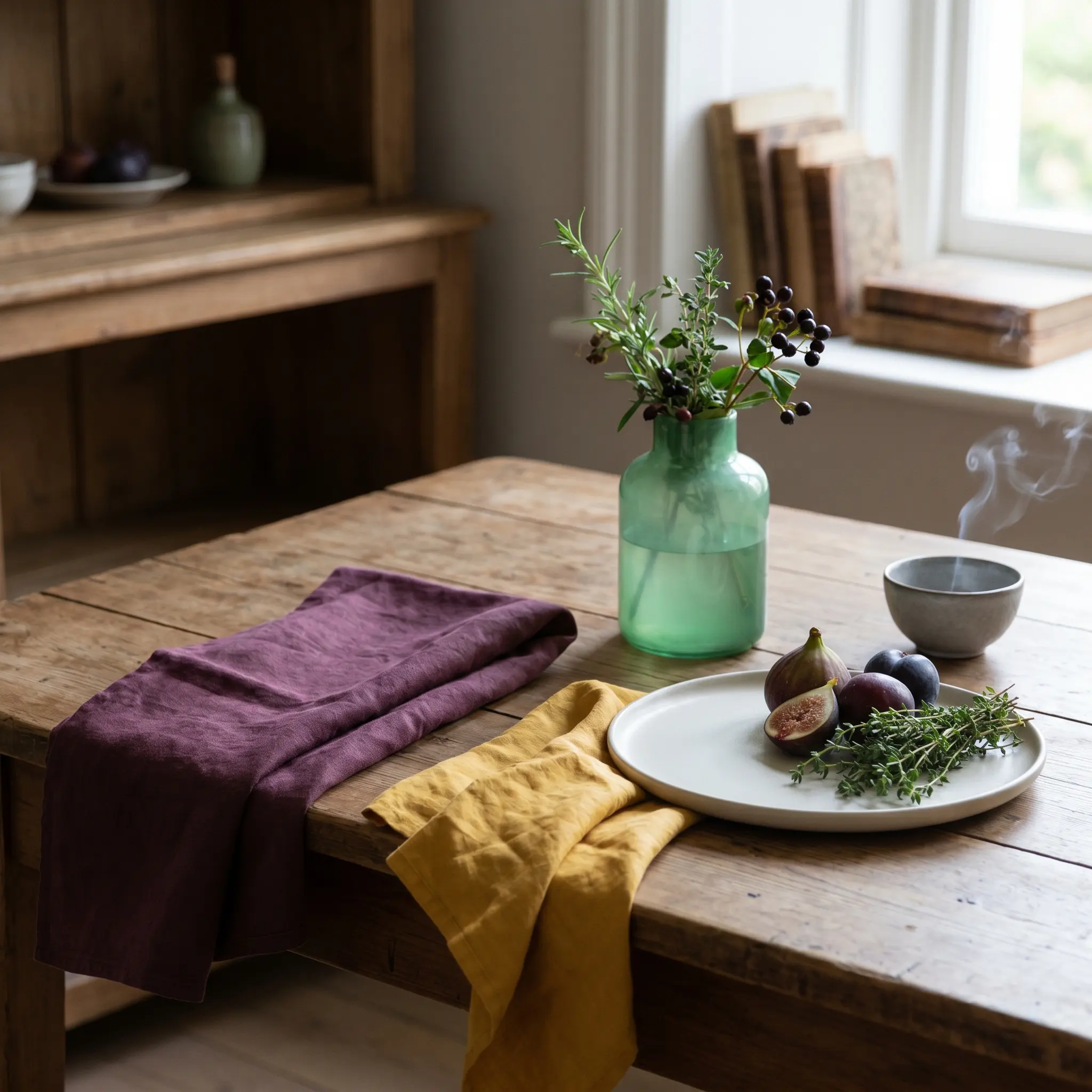
Plum
quiet depth
late candlelight, ceramic bowls, bitter greens
Jade
fresh return
water pitchers, herbs, cold fruit, open windows
Saffron
warm signal
butter, napkins, handwritten place markers
Bone
resting space
bread cloth, blank margins, clean plates
The register is not a trend board. It is a practical language for building a table that signals season, pace, and mood. A single strong color should have room to breathe; a pale field should carry enough texture to avoid feeling unfinished.
Keep one zone acoustically soft: cloth, books, curtains, or coats can absorb the sharp edge of cutlery and glass.
The best seat is not always centered. Give the shy guest a diagonal line of sight and the talkative guest a useful task.
Write down what actually worked the next morning, before ambition edits the evening into a fantasy.