Observation over polish
A table can be beautiful and still be uncomfortable. Rorami studies the evidence of use: where hands reach, where conversation stalls, where light becomes harsh, and where a plate asks too much of the guest.
About Rorami
Rorami Almanac began as a way to describe the part of hosting that recipes rarely hold: the first impression of a room, the way a table invites or refuses conversation, the small repair that makes a gathering feel considered without becoming formal. It is written for people who host with borrowed chairs, mixed plates, modest kitchens, and a strong desire to make guests feel oriented.
The name Rorami is intentionally open. It sounds like a place one might pass through, but the almanac is less interested in travel than in arrival. Its pages look at meal rhythm, color temperature, seating lines, sound, serving order, and the quiet clues that help a room settle. The work is practical, but it keeps a literary edge: each note should be useful enough to try and specific enough to remember.
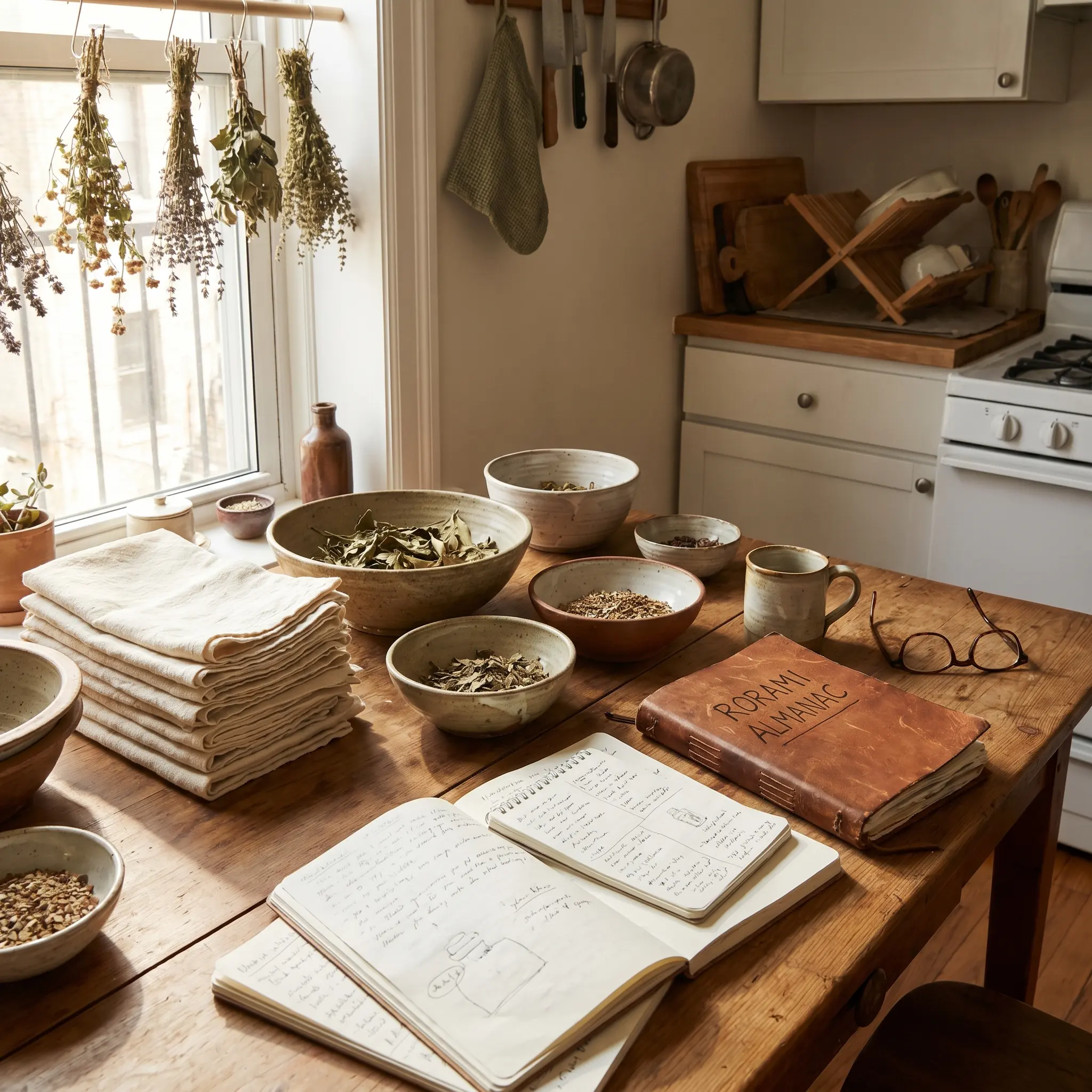
A table can be beautiful and still be uncomfortable. Rorami studies the evidence of use: where hands reach, where conversation stalls, where light becomes harsh, and where a plate asks too much of the guest.
The almanac values gestures that can happen again next month. A good ritual survives a smaller budget, a later train, an extra chair, or a menu that changed because the market had better pears than figs.
Rorami avoids vague coziness. Every atmosphere needs edges: a color decision, a pace decision, a sound decision, and a point at which the host stops adjusting and joins the room.